
Mercedes-Benz S-Class vs. BMW 7 Series
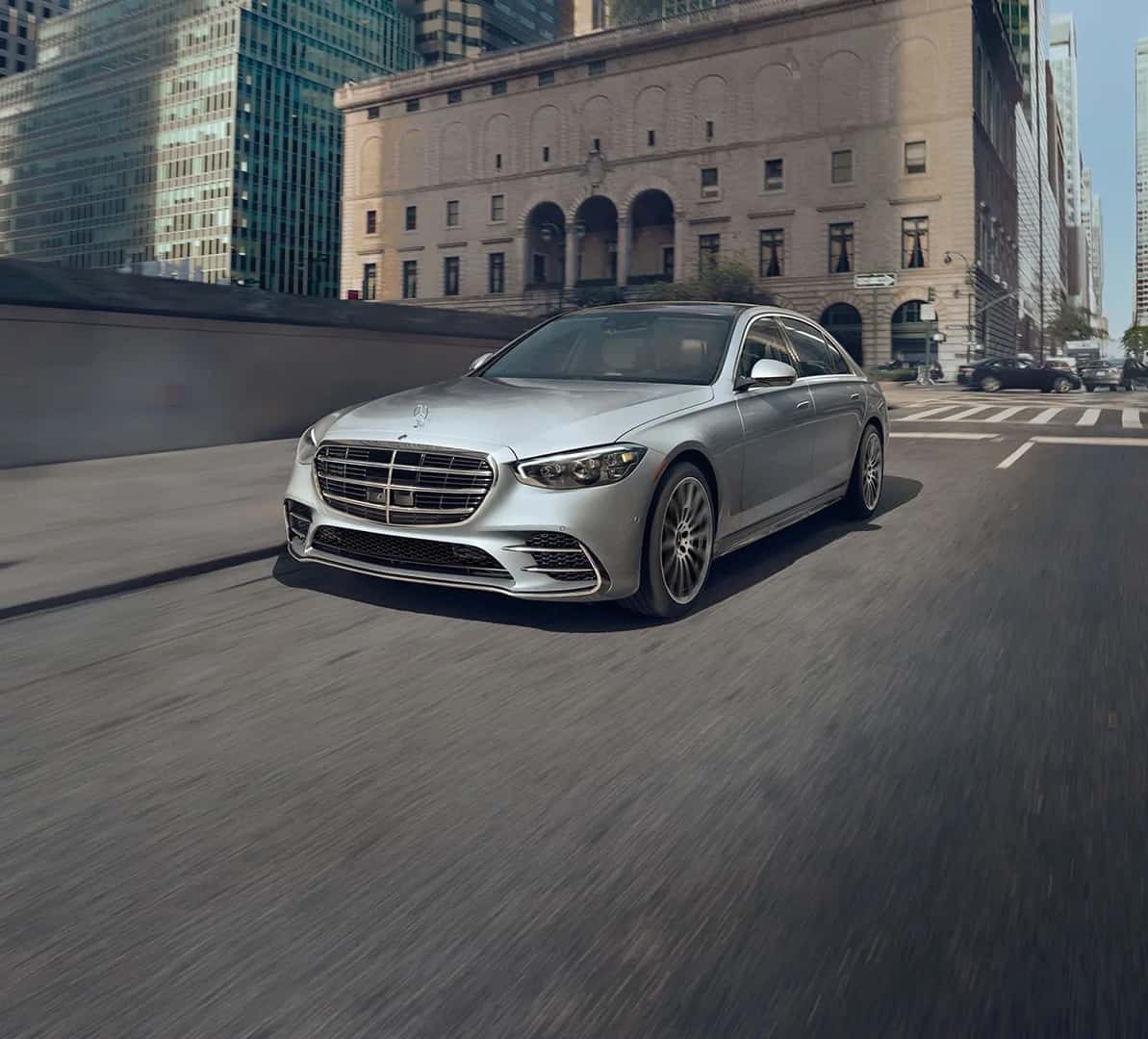
When comparing flagship German luxury sedans, the Mercedes-Benz S-Class versus BMW 7 Series conversation dominates showroom discussions at our Tyler dealership. Both represent decades of automotive excellence, yet they approach luxury from distinctly different perspectives. The S-Class has long defined the luxury sedan segment with its comfort-first philosophy and comprehensive standard features, while the 7 Series carves its path with sportier dynamics and bold design. For discerning buyers in East Texas seeking the ultimate expression of automotive luxury, understanding these differences matters more than brand badges alone.
Flagship German Luxury Sedans: S-Class and 7 Series Overview
The S-Class arrives as Mercedes-Benz’s technological showcase, introducing innovations that eventually trickle down to the entire lineup. It prioritizes serene comfort, advanced safety systems, and an interior environment designed for relaxation during long drives. The BMW 7 Series positions itself as the driver’s choice among luxury flagships, blending executive amenities with performance-oriented engineering.
Both sedans command attention on highways between Tyler and Dallas, yet they serve different priorities. The S-Class excels at making every journey effortless, while the 7 Series injects engagement into the driving experience. At our dealership, we’ve noticed customers gravitating toward the S-Class for its comprehensive approach to luxury, where comfort and technology work together seamlessly. When you explore our S-Class inventory, these philosophical differences become immediately apparent.
Exterior Design Philosophy and Road Presence
The S-Class exterior embodies timeless elegance through smooth, flowing lines and restrained chrome accents. Its design communicates confidence without aggression, appealing to buyers who appreciate understated sophistication. The front fascia features the distinctive Mercedes-Benz grille that balances presence with refinement, while LED lighting technology provides modern visual signatures without overwhelming the design’s inherent balance.
BMW takes a bolder approach with the 7 Series, showcasing prominent kidney grilles and sharper character lines that create more visual drama. It leans contemporary and assertive, particularly in M Sport configurations. Some love this modern interpretation of luxury, while others find the S-Class’s measured elegance more appropriate for a flagship sedan. Both vehicles turn heads, but the S-Class does so through refined presence rather than bold statements. For buyers in professional settings, this distinction often influences decision-making.
Interior Craftsmanship and Cabin Experience
Step inside the S-Class and you’ll recognize the difference between luxury and true opulence. Mercedes-Benz sources premium leather, genuine wood trim, and brushed metals throughout the cabin, assembled with precision that rivals boutique craftwork. Every surface feels substantial, every switch operates with satisfying tactile feedback. The dashboard flows seamlessly from door to door, creating a cohesive environment rather than separate elements. Ambient lighting with 64 color options transforms the cabin atmosphere to match your mood.
The S-Class delivers a more intimate, cocoon-like cabin environment designed around passenger comfort, with competitive front headroom and legroom dimensions. The 7 Series, meanwhile, offers notable rear legroom and a substantially larger trunk, priorities that suit different buyer preferences.
The BMW 7 Series presents a tech-forward interior aesthetic with quality materials, but it emphasizes visual impact over the S-Class’s focus on tactile luxury. Both cabins impress, yet the S-Class creates an environment designed for relaxation rather than stimulation. That philosophy extends to acoustic engineering, where superior sound insulation creates a remarkably quiet sanctuary even at highway speeds.
Rear-Seat Amenities and Executive Comfort
The S-Class distinguishes itself in rear-seat accommodations, where Mercedes-Benz engineers innovations specifically for executive passengers. Multi-contour seats with massage functions target specific muscle groups during long trips, while extensive legroom allows even tall passengers to stretch comfortably. Individual climate zones ensure perfect temperature regardless of front-seat preferences. The Executive Rear Seat Package adds powered adjustability, dedicated entertainment screens, and heated armrests that transform the back seat into a mobile office or relaxation zone.
BMW equips the 7 Series with comfortable rear seating and technology features, but it doesn’t match the S-Class’s comprehensive attention to passenger luxury. For business executives who spend significant time in the back seat or families who prioritize passenger comfort, this becomes a decisive factor. We’ve had numerous customers specifically test the rear seats during showroom visits.
Technology, Infotainment, and Digital Innovation
The S-Class debuts the latest MBUX infotainment system with a massive central touchscreen that responds instantly to inputs. Voice recognition understands natural speech patterns, allowing you to control navigation, climate, and entertainment without memorizing specific commands. Augmented reality navigation overlays directional arrows onto a live camera view of the road ahead, making complex intersections foolproof. Wireless smartphone integration works seamlessly with both Apple CarPlay and Android Auto.
BMW’s iDrive system also delivers sophisticated technology with sharp graphics and extensive customization options. Both systems demonstrate impressive capabilities, but the S-Class’s MBUX feels more intuitive during daily use. Over-the-air updates add new features and refinements throughout ownership, ensuring the technology stays current without requiring dealership visits. The S-Class also includes a premium Burmester audio system as standard equipment, while BMW offers this as an optional upgrade. For audio enthusiasts, the difference in sound quality justifies the S-Class choice alone.
Advanced Safety and Driver-Assistance Features
Safety technology separates the S-Class from competitors more than any other category. It includes Car-to-X Communication as standard equipment, a system that allows vehicles to share information about hazards, traffic conditions, and road obstacles. This technology remains unavailable on the 7 Series at any price point. The S-Class also features a front seat center airbag that deploys between driver and passenger during side impacts, reducing collision forces. BMW doesn’t offer this protection.
Both vehicles include adaptive cruise control, blind-spot monitoring, automatic emergency braking, and lane-keeping assistance. However, the S-Class makes a surround-view camera system standard, while BMW lists it as an optional extra. The PRESAFE® system prepares the S-Class for potential collisions by adjusting seats, closing windows, and pre-tensioning seatbelts before impact occurs. When you contact our team about test drives, we demonstrate these safety features in detail because they represent substantial added value.
Performance Options and Driving Character
The S 500 delivers 442 hp from its turbocharged 3.0-liter inline-six engine, providing effortless acceleration and smooth power delivery. That’s 67 more horsepower than the BMW 740i’s 375 hp base engine, a meaningful advantage for passing maneuvers and highway merging. Plug-in hybrid models push output to 503 hp while improving fuel efficiency for commuting. The range-topping V8 generates 496 hp for buyers seeking maximum performance.
BMW counters with a similar engine lineup, including a 483 hp plug-in hybrid (750e xDrive) and a 536 hp V8 in the range-topping 760i xDrive that exceeds the S 580’s output by 40 hp. For pure performance seekers, that V8 advantage matters. However, most luxury sedan buyers prioritize the base engine experience, where the S-Class’s 67 hp advantage creates a more satisfying daily driving character. All S-Class models include 4MATIC® AWD as standard equipment, providing confident traction in varied conditions. BMW makes AWD optional on the 740i, requiring buyers to pay extra for all-weather capability.
Comfort-Focused vs. Sport-Oriented Dynamics
The S-Class emphasizes comfort through AIRMATIC® air suspension that automatically adjusts to road conditions, smoothing out imperfections before they reach the cabin. Rear-wheel steering improves both low-speed maneuverability and high-speed stability. The driving experience prioritizes serenity: acceleration builds progressively, steering provides accurate feedback without harshness, and the chassis absorbs bumps rather than telegraphing them.
BMW engineers tune the 7 Series for more dynamic handling, with firmer damping and sharper steering response that create a sportier character. Some buyers appreciate this approach, particularly those who enjoy spirited driving on winding roads, but the sport-oriented setup sacrifices ride comfort on rough pavement. For long highway cruises common in East Texas, the S-Class’s comfort bias proves more appropriate.
Pricing, Fuel Efficiency, and Ownership Considerations
The S 500 starts around $119,500, while the BMW 740i begins near $98,475, a $21,025 difference that initially favors BMW. Here’s the thing though: comparing starting prices overlooks the value equation. The S-Class includes standard AWD, surround-view camera, and premium audio system that require costly option packages on the 7 Series. When equipped comparably, the price gap narrows significantly while the S-Class retains exclusive technologies like Car-to-X Communication and the center airbag unavailable on BMW.
Fuel efficiency favors the 740i, with the base RWD model earning EPA ratings of 25 city and 31 highway MPG compared to the S 500’s 21 city and 31 highway figures. Buyers who add xDrive AWD to match the S 500’s standard all-wheel drive see that city advantage narrow to 3 MPG (24 city), while highway efficiency remains identical at 31 MPG for both.
Reliability Expectations and Long-Term Value
Mercedes-Benz has strengthened reliability across recent model years, with the S-Class benefiting from extensive testing before innovations reach production. Both vehicles are backed by comprehensive four-year/50,000-mile warranty coverage.
Resale values favor the S-Class due to its benchmark status within the luxury segment. Buyers recognize the S-Class as the definitive luxury sedan, supporting stronger residual values that offset the higher initial investment.
The Verdict: Mercedes-Benz S-Class vs. BMW 7 Series
The Mercedes-Benz S-Class versus BMW 7 Series comparison reveals two excellent vehicles serving different priorities. The S-Class excels at delivering comprehensive luxury through superior comfort, more interior space, and advanced safety technology that comes standard rather than optional. Its 442 hp base engine outpowers the 740i by 67 hp while including AWD across all trims. The surround-view camera, premium audio, Car-to-X Communication, and center airbag provide convenience and protection unavailable on the 7 Series.
The BMW 7 Series offers advantages for specific buyers, particularly those prioritizing sportier dynamics, better city fuel economy, and a lower starting price. Its 536 hp V8 option delivers more power than the S-Class’s top engine. When we evaluate the complete ownership experience considering standard features, interior space, safety technology, and long-term value, the S-Class emerges as the more compelling choice for discerning luxury sedan buyers.
Key Advantages of Each Flagship Sedan
The S-Class stands out through measurably more interior space, 67 additional base horsepower over the base 740i, standard AWD, and exclusive safety features that demonstrate Mercedes-Benz’s commitment to comprehensive luxury. Its comfort-focused dynamics suit long-distance driving better than the sportier 7 Series setup, while superior build quality and stronger resale values support long-term investment.
The 7 Series counters with better city fuel efficiency, a lower entry price, and sportier driving character that appeals to enthusiasts. Its bold exterior design makes stronger visual statements than the S-Class’s restrained elegance. Both sedans represent German engineering excellence. The choice depends on whether you value the S-Class’s comprehensive luxury or the 7 Series’s performance-oriented approach to the flagship sedan segment.
0 comment(s) so far on Mercedes-Benz S-Class vs. BMW 7 Series